Sumita Optics (Dongguan)

Optical fiber

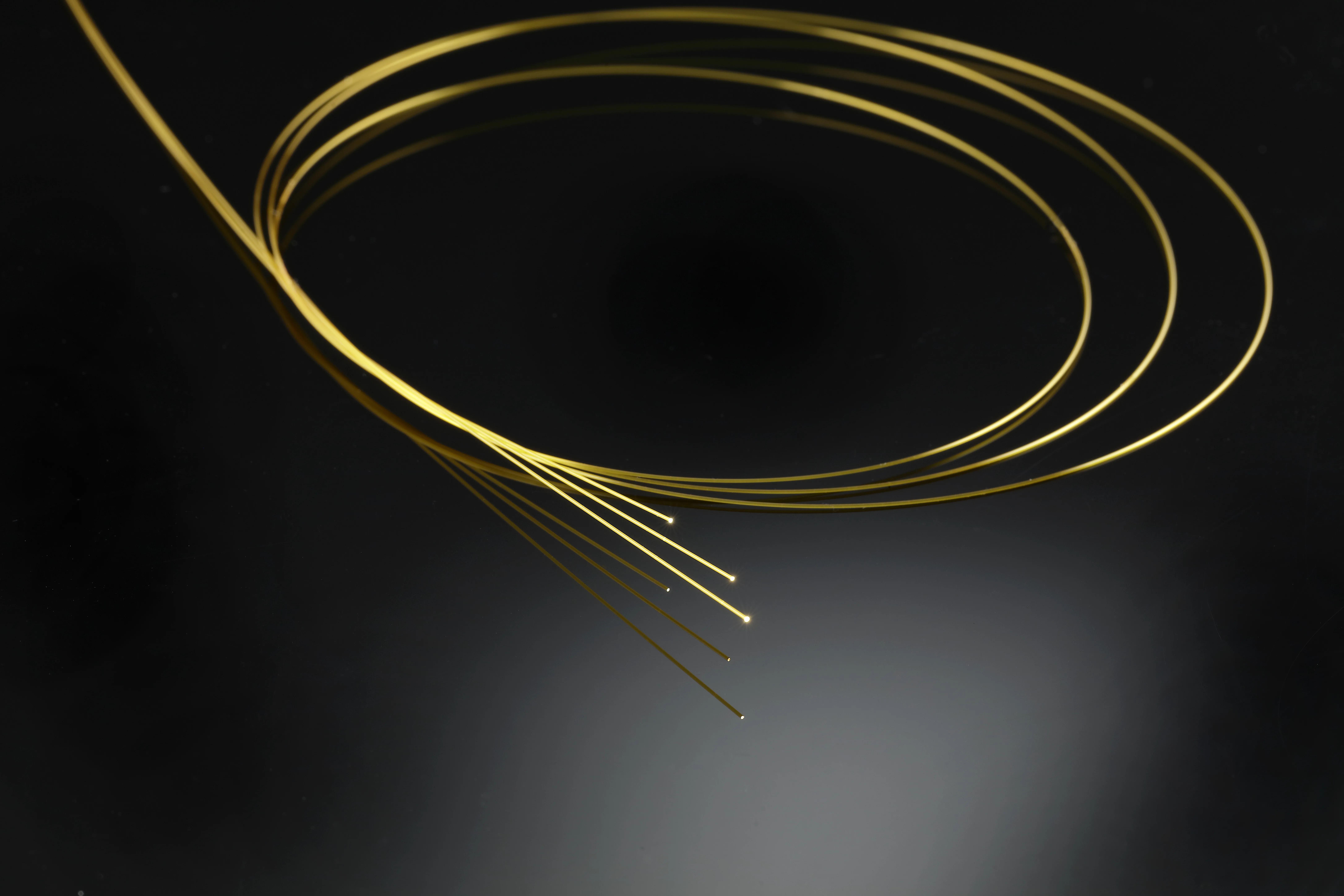
A broad material range for visible, near-infrared, ultraviolet and multicomponent glass fibers.

Sumita optical fiber models and numerical-aperture table

Principles

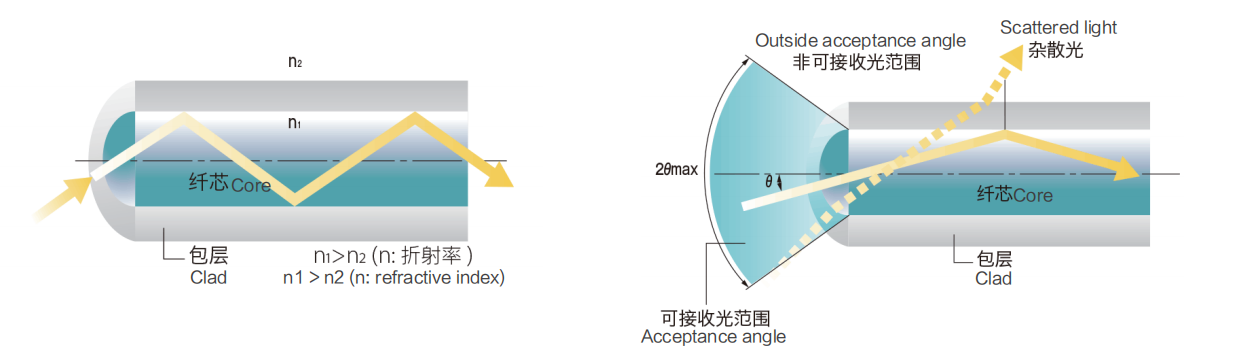
Structure and principle of optical fiber

The numerical aperture (NA) and divergence angle of an optical fiber can be calculated by substituting the refractive indices of the core material and cladding material into the following formula.

sinθ = NA = √(n₁² − n₂²)

An optical fiber used in light guides consists of a core surrounded by a clad layer (see Figure 1). – Core is made of optical glass which has an excellent transmission property. – Clad is made of weather-resistant glass, and works as a covering material. This structure of fiber allows light to travel along the fiber through repeated total internal reflections* inside the core from one end to the other.
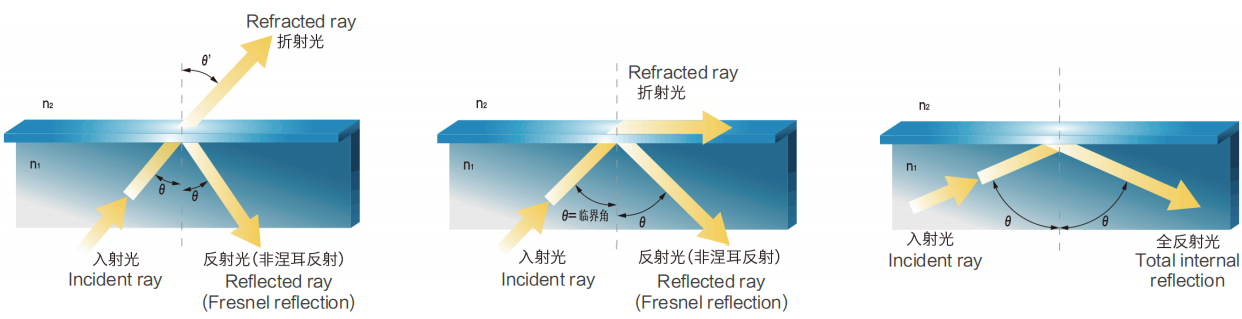
※Total internal reflection is a phenomenon, as shown in the diagram, where light is completely reflected at the interface between two transparent dielectric materials with different refractive indices, when the incident angle reaches a specific value (the critical angle).
Exceptional Expertise in Optical Glass Materials The Only Optical Fiber Products from Sumita Optical inc

As an optical glass material manufacturer, we leverage decades of technical expertise accumulated in the optical field. Sumita Optical Glass boasts significant advantages and confidence in the development and production of optical fibers. From our extensive range of optical fiber products, we help you select the optimal fiber for your application, and also provide comprehensive proposals including product design.

Sumita Optical has flexibly applied this characteristic to develop a variety of optical fibers with different divergence angles.

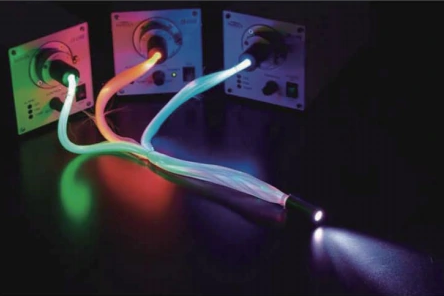
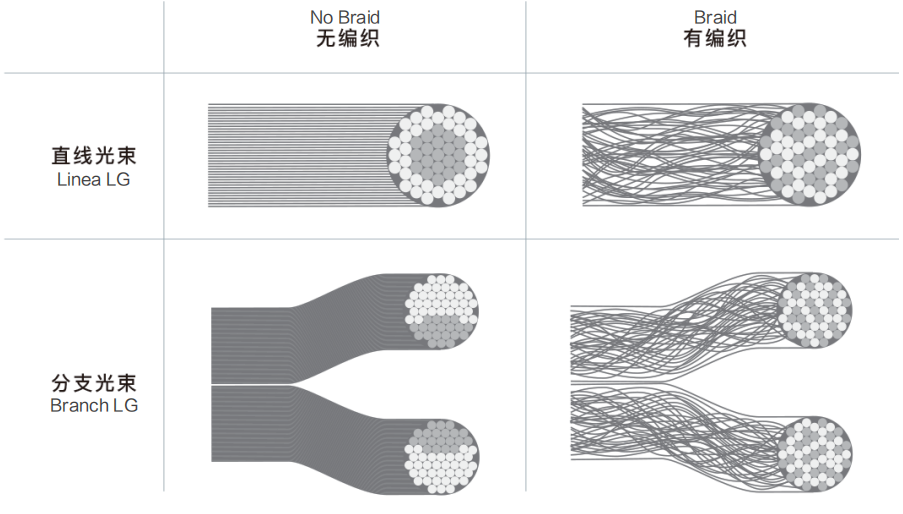
Splitting and Combining of Light

It makes it possible to split a single beam of light into multiple beams, or combine multiple beams into a single one.
Fiber Braiding

The optical fiber filaments undergo complex braiding processing to convert incident light into uniform light for transmission.
The basic technology and application of optical fiber

Transmission of Light and Image

Connects two different locations to transmit light and image. Effectively blocks heat generated by the light source, transmitting only light and images to the destination.

Flexible and Bendable

Composed of ultra-fine and flexible glass optical fiber filaments, making it highly bendable. Can be freely bent within equipment.

High Heat Resistance

Optical fiber filaments made of glass material offer excellent heat resistance. The end face of the light guide bundle can withstand a maximum temperature of 350°C.

Electrical Interference Immunity

Optical fiber filaments made of glass material are minimally affected by electrical signals and do not generate static electricity that could interfere with equipment.

Customizable Light Shape

The shape of the light-emitting surface can be indirectly altered by changing the shape of the light guide bundle's end face. Enables free customization of the light-emitting surface shape.
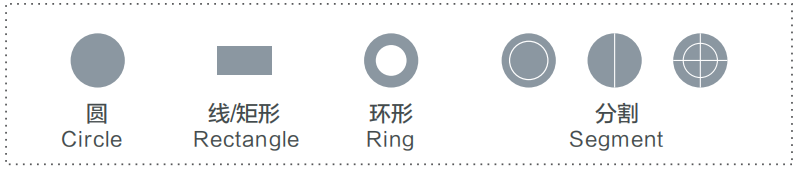
※For special-shaped specifications, please feel free to contact us.

Optical fiber sort

Optical fiber sort
WavelengthMaterialType of Optical FiberNumerical Aperture (NA)Opening angle (2θ)
VisibleMulticomponent glassSOG-120C0.86119°
SOG-1000.77100°
SOG-80S0.6379°
SOG-70S0.5770°
SOG-35C0.3135°
SOG-150.1416°
Plastic optical fiberSOP-200.5060°
NIR (Near IR)Multicomponent glassSOG-70SIR0.5770°
UVMulticomponent glassST365-350.3238°
Quartz optical fiberSOQ-2000.2225°

Multicomponent glass fiber

Sumita Optics (Dongguan)

SOG-120C

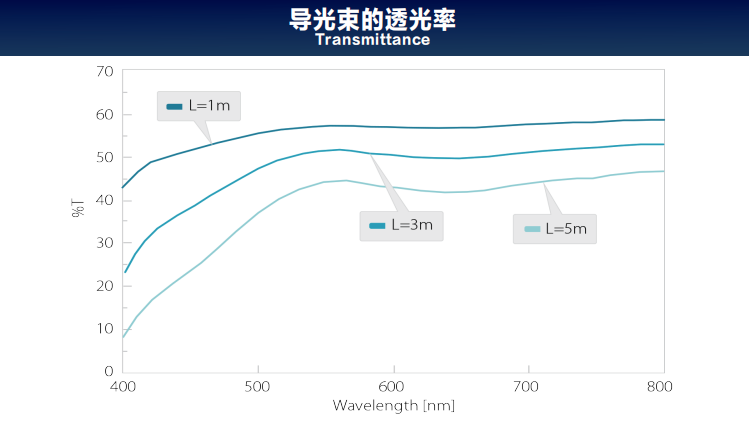
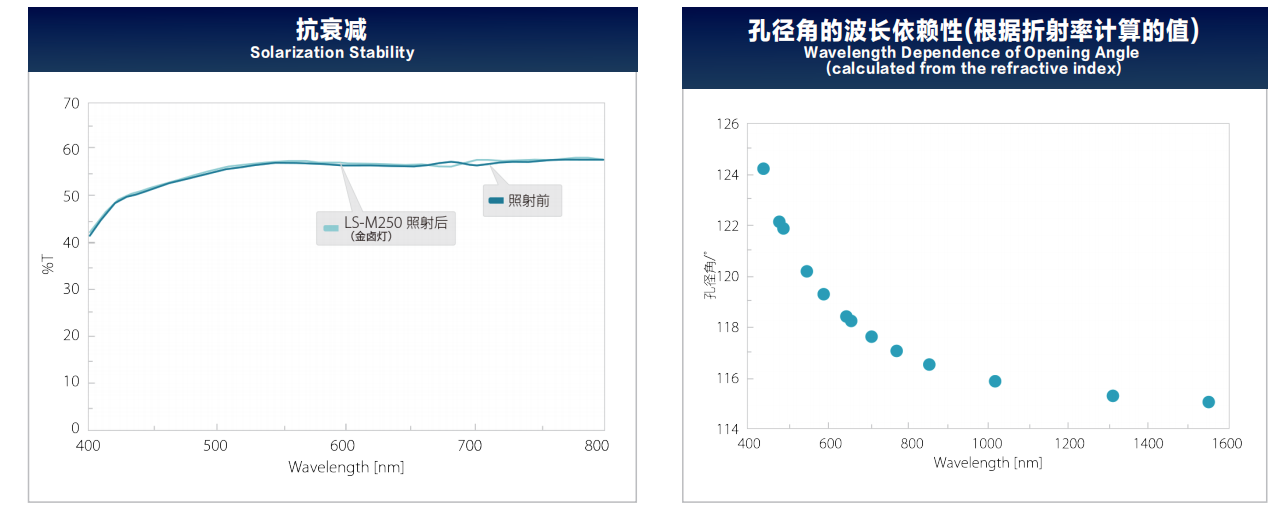
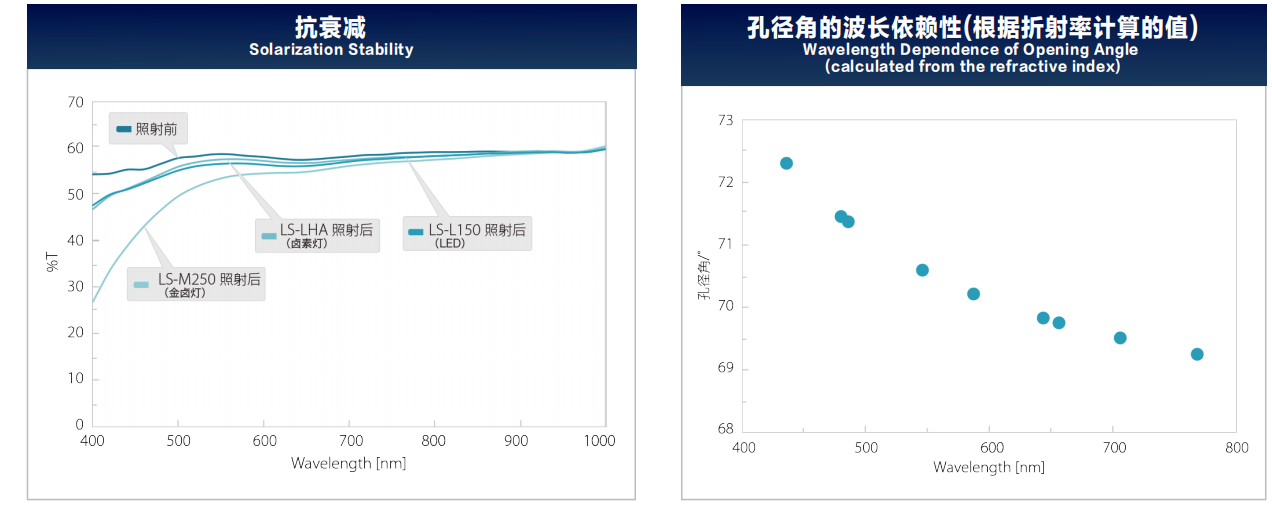
SOG-120C is the multi-component glass fiber with the largest NA (numerical aperture) in our fiber optic series products. By utilizing its large NA characteristics in conjunction with a wide-angle light source, a larger illumination area can be obtained. Very suitable for application scenarios of short distance and large angle lighting. Adopting green and environmentally friendly materials, widely used in medical fields such as endoscope lighting.

Technical Data
Type of Optical FiberA multimode/step index optical fiber
Numerical Aperture0.86 @587nm
Opening Angle119° @587nm
Optical Attenuation (Reference value)2.00 dB/m @400nm / 0.50 dB/m @550nm
Single Fiber Diameter30μm、50μm +3μmCore:115μm Cladding:125μm Coating:150μm*1
Heat Resistance<200°C<80°C
Chemical Resistance*2Core GlassCladding Glass
Acid Resistance42
Water Resistance12
Sumita Optics (Dongguan)

SOG-70S

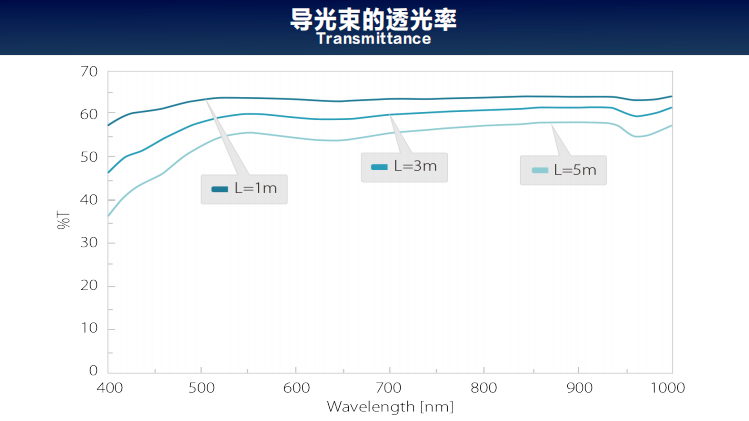
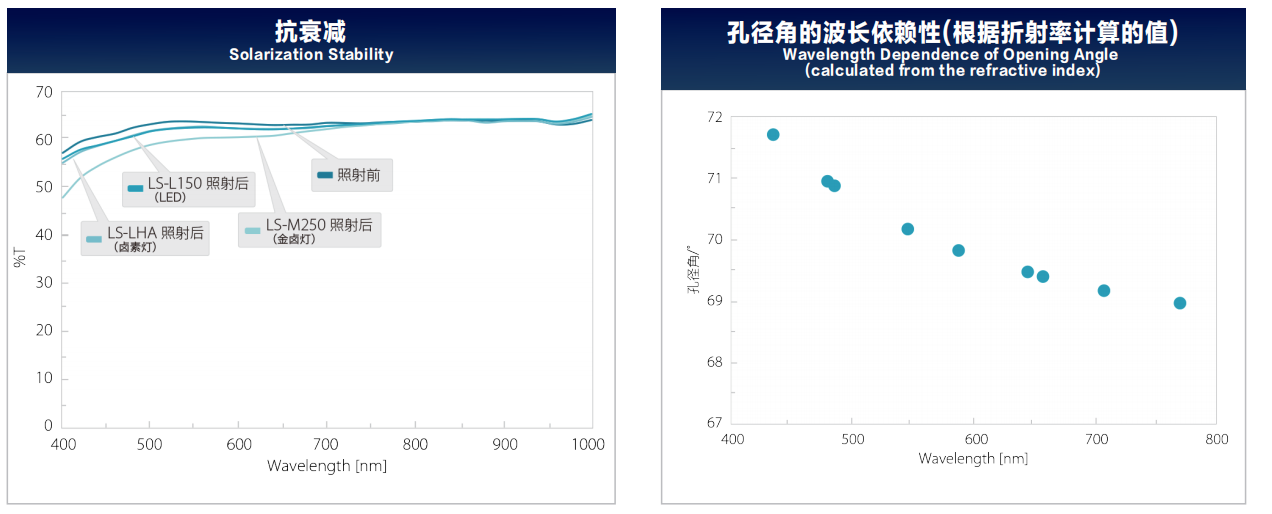
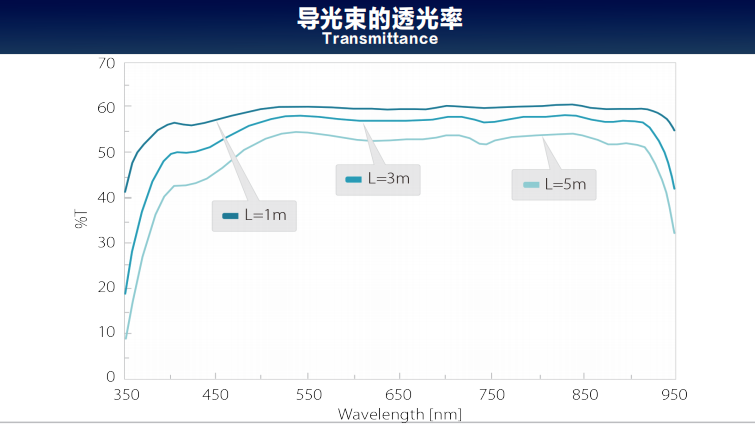
SOG-70S multicomponent glass fibers have excellent color rendering and transmittance from 400 nm to 1000 nm. The SOG-70S fiber is thermally stable. Heat fused light guides using SOG-70S are also available. Free of harmful substances like lead and arsenic. Suitable for medical application.

Technical Data
Type of Optical FiberA multimode/step index optical fiber
Numerical Aperture0.57 @587nm
Opening Angle70° @587nm
Optical Attenuation (Reference value)0.70 dB/m @400nm / 0.25 dB/m @650nm
Single Fiber Diameter30μm、50μm +3μm
Heat Resistance<200°C
Chemical Resistance*2Core GlassCladding Glass
Acid Resistance42
Water Resistance12
Sumita Optics (Dongguan)

SOG-70SIR

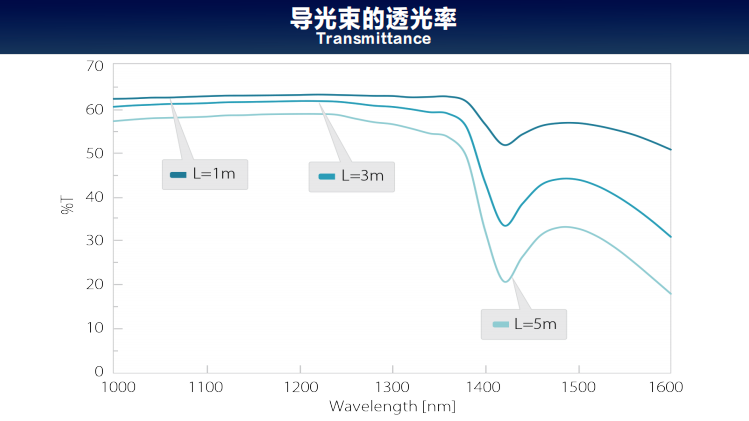
SOG-70SIR multicomponent glass optical fibers are excellent in transmission from 1100 nm to 1350 nm. The SOG-70SIR fiber has low OH absorption, especially at 1420 nm, and low transmission loss in NIR. Since the fiber transmits well in NIR, it is widely used for heat related power transmission and sensors. Free of harmful substances like lead and arsenic. Suitable for medical application.

Technical Data
Type of Optical FiberA multimode/step index optical fiber
Numerical Aperture0.57 @587nm
Opening Angle70° @587nm
Optical Attenuation (Reference value)1.20 dB/m @1,430nm
Heat Resistance<200°C
Single Fiber Diameter50μm ±3μm
Chemical ResistanceCore GlassCladding Glass
Acid Resistance21
Water Resistance11
Sumita Optics (Dongguan)

ST365-35

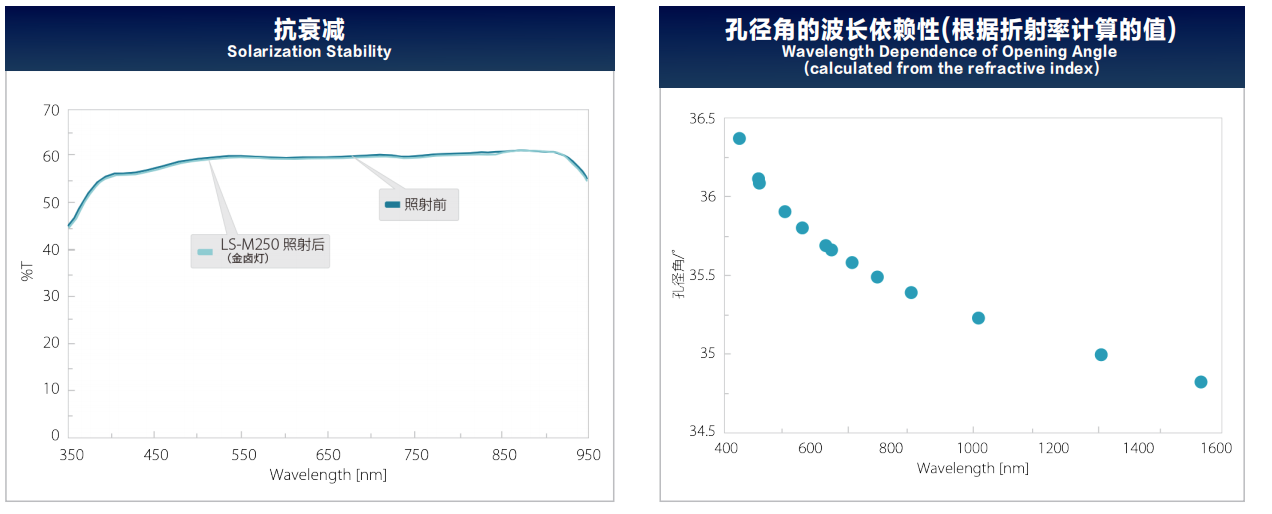
ST365-35 multi component glass fibers can be used at 365 nm and above (UVA–Vis). Compared to typical silica fibers, ST365-35 fibers are thin and highly flexible, allowing the fiber bundles to be assembled in complex shapes and randomized. The ST365-35 boasts high NA, enabling efficient light collection. Free of harmful substances like lead and arsenic. Suitable for medical application. Note: ST365-35 fibers may exhibit solarization depending on the wavelength and intensity of a light source, the operating temperature, etc.

Technical Data
Type of Optical FiberA multimode/step index optical fiber
Numerical Aperture0.32 @587nm
Opening Angle38° @587nm
Optical Attenuation (Reference value)1.00 dB/m @365nm
Single Fiber Diameter30μm、50μm +3μm
Heat Resistance<200°C
Chemical Resistance*2Core GlassCladding Glass
Acid Resistance42
Water Resistance32

More products

Continue exploring the portfolio

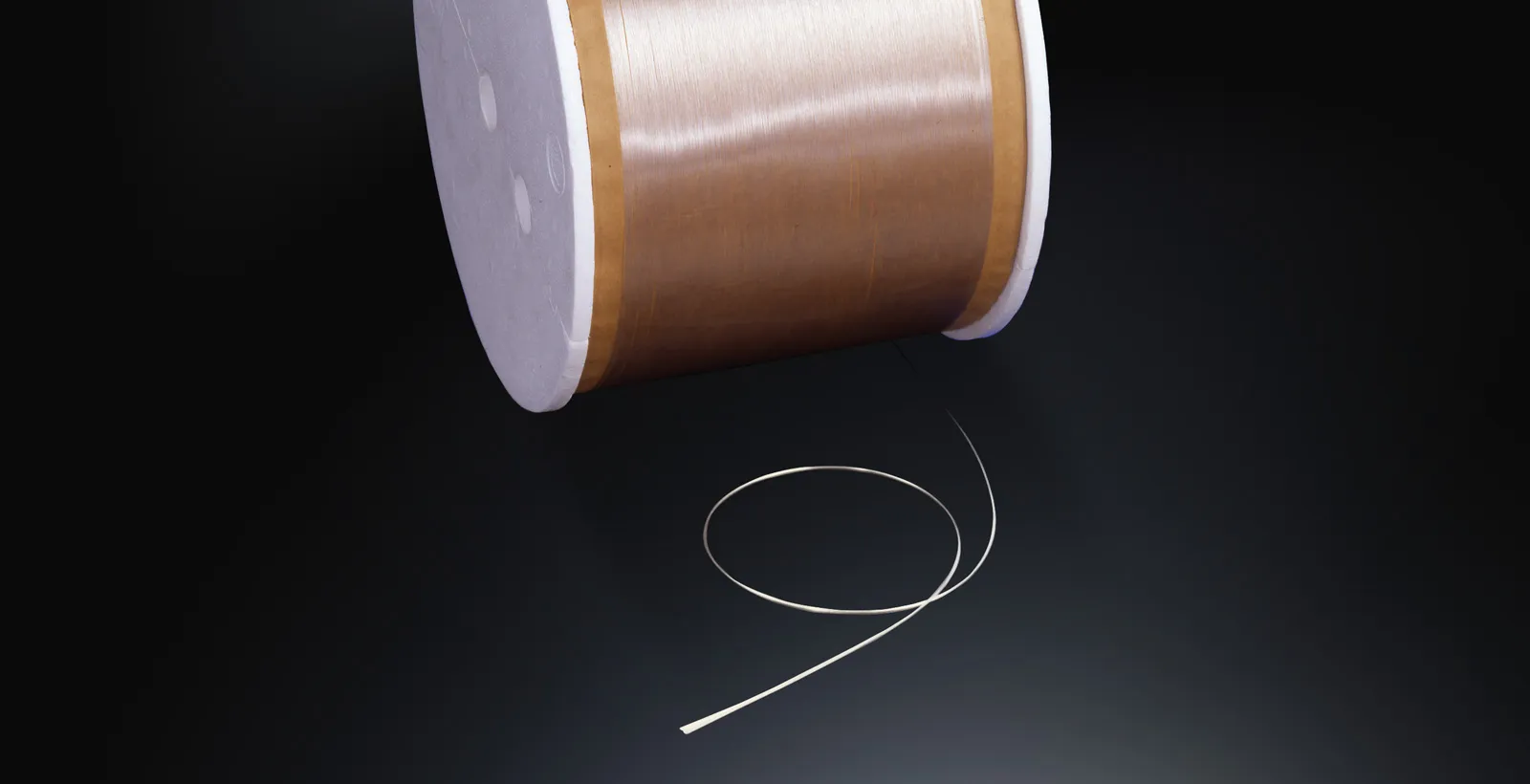
Sumita HDIG ultra-fine imaging bundle and end-face structure
Sumita Optics (Dongguan)

Imaging bundles

HDIG ultra-fine high-definition and flexible imaging bundles for clear image transfer in confined spaces.

View product
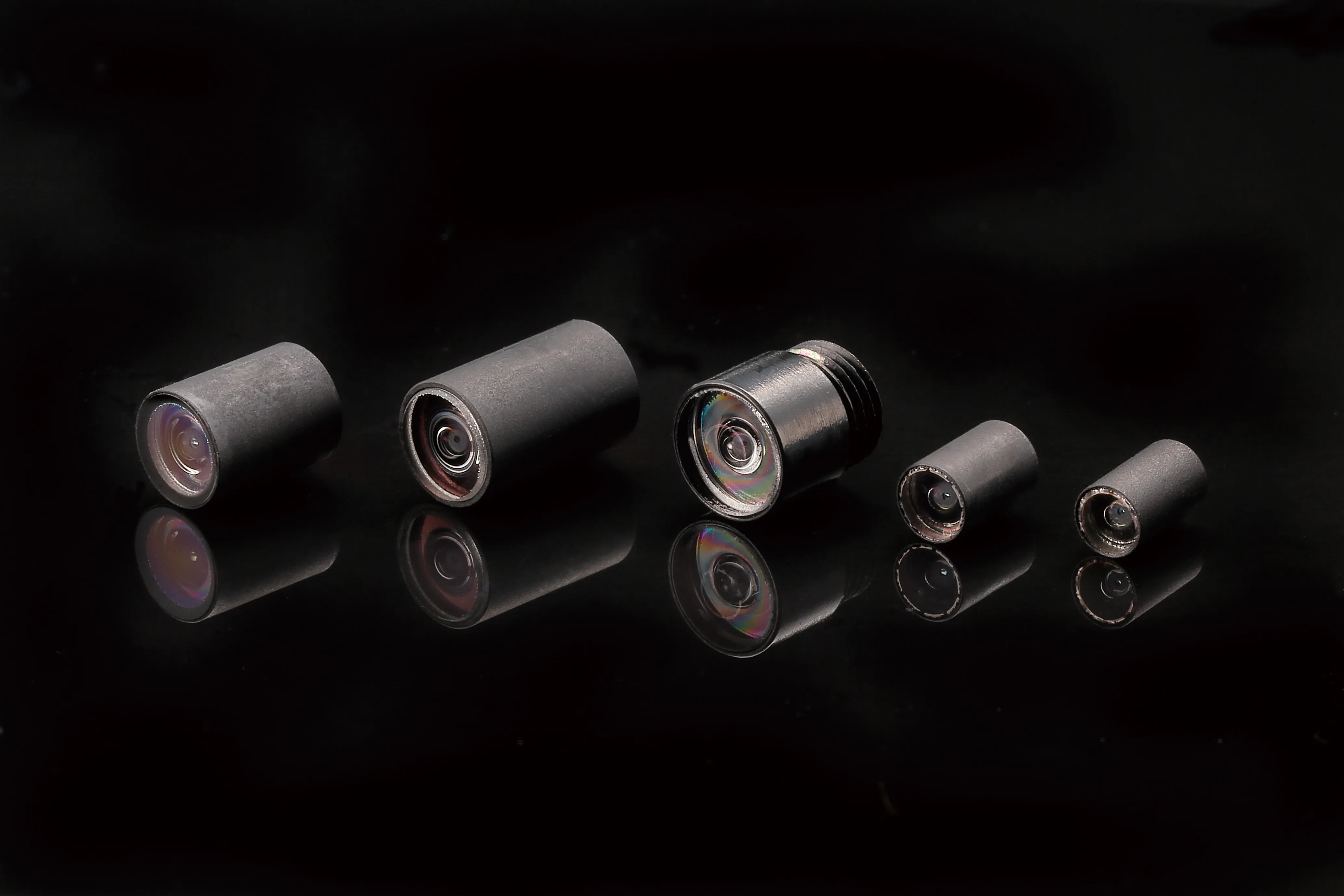
Sumita miniature electronic endoscope lens series
Sumita Optics (Dongguan)

Endoscope lenses

Electronic endoscope lenses and lenses for flexible imaging bundles in compact formats.

View product
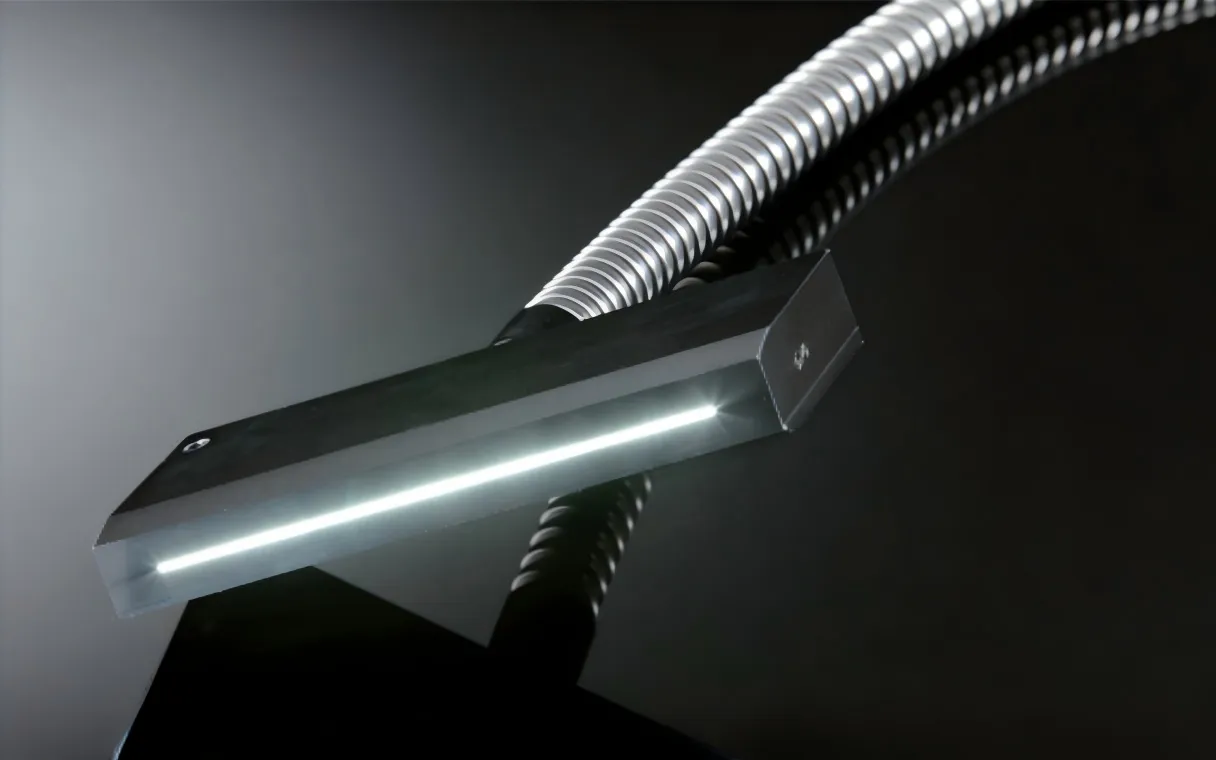
Linear lamp tube for inspection
Sumita Optics (Dongguan)

Linear lamp tube for inspection

Linear illumination components for long, narrow inspection areas.

View product